
Chavez Bikers
If the number of elections in a year constituted a democracy, Venezuela would be the most democratic country in the world.
Despite the fact that a new president, Nicolas Maduro, has already been sworn in, there exists so much doubt about the validity of his April 14 election that the government (after much prodding) is conducting an audit of the election. The audit likely won’t change they result, yet it is being carried out anyway.
The emphasis on the importance of voting in Venezuela is rather curious, considering that no matter the election, presidential, local or a referendum, irregularities always surface. There were over 3,000 reports of irregularities just hours after the polls closed on April 14, according to opposition candidate Henrique Capriles.
These irregularities, which range from accounts of blatant voter fraud to frightening incidents of intimidation, could have contributed to the margin of approximately 235,000 votes by which interim president Nicolas Maduro won. The Capriles camp claims to have counted polling station tallies on its own across the country on Election Day and come up with numbers different than those announced by the Venezuelan National Electoral Commission (CNE).
Unfortunately for the opposition, proving voter fraud in a country where voter intimidation is uncomfortably common, is nearly impossible. Palpable evidence is hard to come by, which is why the Capriles campaign called for a total recount of every single printed list of voters around the country. A task, though laudable in nature and fully accepted by international entities like the Organization of American States (OAS), will be tough to complete.
“It’s so frustrating,” complains law student Juan Benitez. “The whole world knows this election was a farce, but no one can do anything about it.” Juan lives in France and returned to Venezuela to vote.
Not only has the government prohibited a recount (and gone ahead naming Maduro as president-elect on April 15), but Maduro has insinuated that Capriles should be arrested for not recognizing official results.
Electoral Party
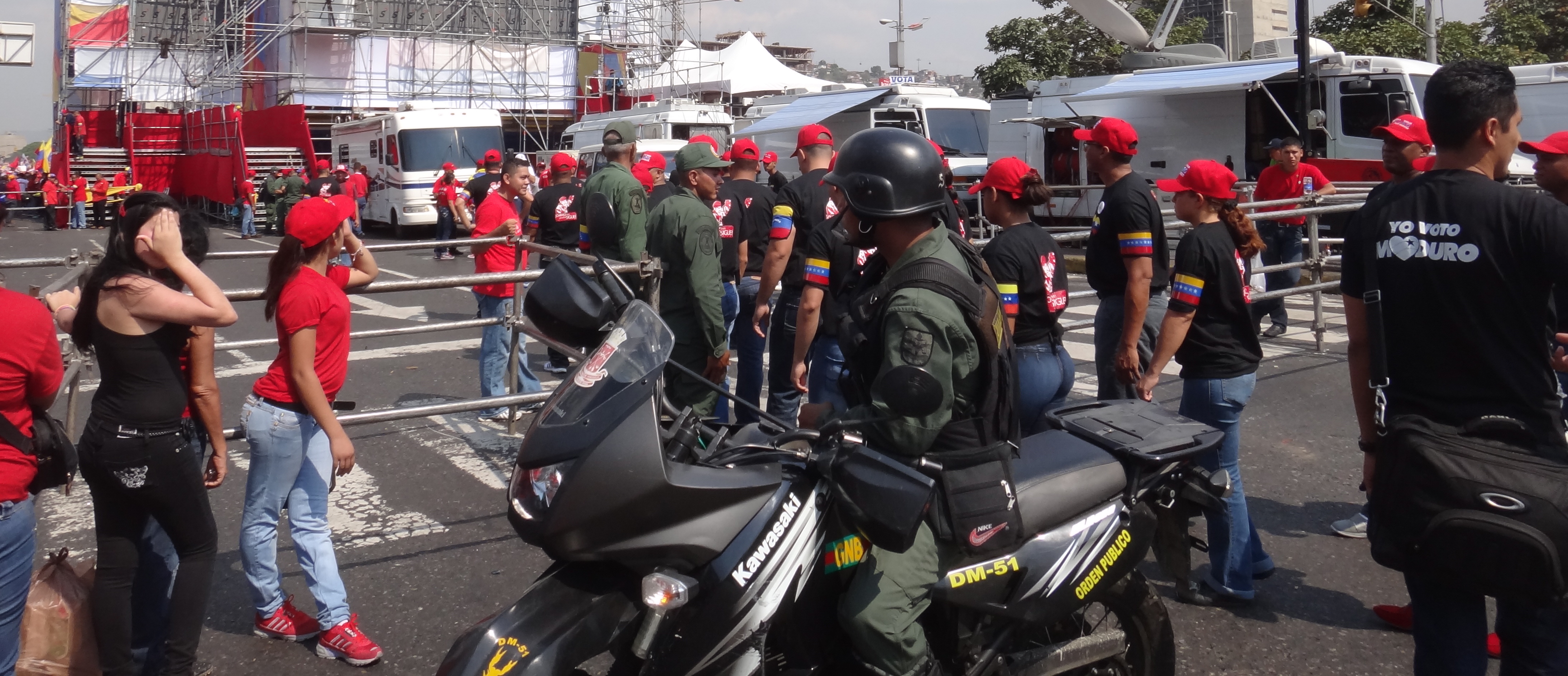
Who do you think you are voting for?
As with most things in Venezuela, Election Day is a celebration. Most Venezuelans went to the polls April 14 without incident. Trucks with large speakers (usually blasting upbeat music) drove through the city encouraging people to get out and vote. But for some people, a festive day quickly turned sour.
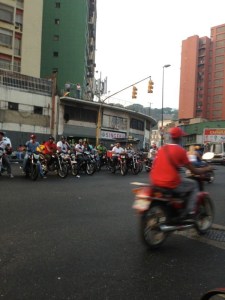
In Montalban, a neighborhood in southeastern Caracas, there were at least two major reports of irregularity. At one polling station, a man claiming to want to help disabled voters was found with 40 ID cards. He was later arrested after local media brought attention to the irregular situation. At another voting center, eyewitnesses reported that an armed group of red-shirted of motorcyclists attempted to enter through the back door of a voting center by force. In Venezuela, red shirts have become a symbol of support for Chavismo, the official party line. In a true act of “neighborhood watch,” vigilant voters who had been standing in line, blocked the group. The motorcyclists dispersed before police arrived on the scene.
Yet not all cases have happy endings.
In the neighborhood of San Bernardino, red-shirted motorcyclists brandishing weapons headed straight for Capriles volunteers. Four of the volunteers were beaten. As a result, all volunteers around the district were removed from their posts. Opposition officials ordered them back to the campaign office, leaving voters in line outside of the centers to decide which way to vote. San Bernardino is a middle-class neighborhood, hard-hit by increasing crime. Displays of intimidation like this are common.
Some 400 other voting centers called the Capriles campaign center to complain of similar red-shirted gangs engaging in intimidation. In approximately 280 other voting centers, opposition witnesses (each political party is entitled to three witnesses at each voting center) complained of being removed from the center by Chavistas before the post-election audits had been completed.
The list of anecdotes from Election Day goes on for miles. These incidents, though grave, are unlikely to be addressed by authorities because they were filed by opposition supporters.
Since the Capriles campaign called for a vote recount, ballot boxes throughout the country have gone missing. Some turned up on the sides of highways in states like Barinas less than 24 hours after the polls closed on April 14. In the days and weeks ahead, more ballot boxes will likely show up in unlikely places.
Sadly, in cases like Venezuela, the international community’s hands are essentially tied. South American presidents have urged “calm.” The United States, after being accused by Maduro of being in cahoots with Capriles in a coup d’etat plot, has done nothing more than reiterate its support for a vote recount.
Capriles’ plans for peaceful dissidence by pot-banging and demonstrations outside of the National Electoral Commission (CNE) were quickly killed after Maduro banned any marches. Capriles later told his followers to heed the ban, saying that government infiltrators would likely attend the march and provoke further violence.
Both sides have accused the other of paying gangs to attack supporters of the other side. But after 135 arrests and more than 60 injuries at opposition marches, it is clear who is on the losing side of this battle.
It is difficult to predict when justice will come to Venezuela. Despite Capriles’ more assertive attitude with Maduro, the playing field simply isn’t even, and the idea that a petition for an election recount can change things is nothing short of quaint.
Voting is over, but intimidation continues. The question is, for how long? It’s the hope of many Venezuelans that by the time the next election rolls around, it won’t just be for show.
 Spanglish Observer